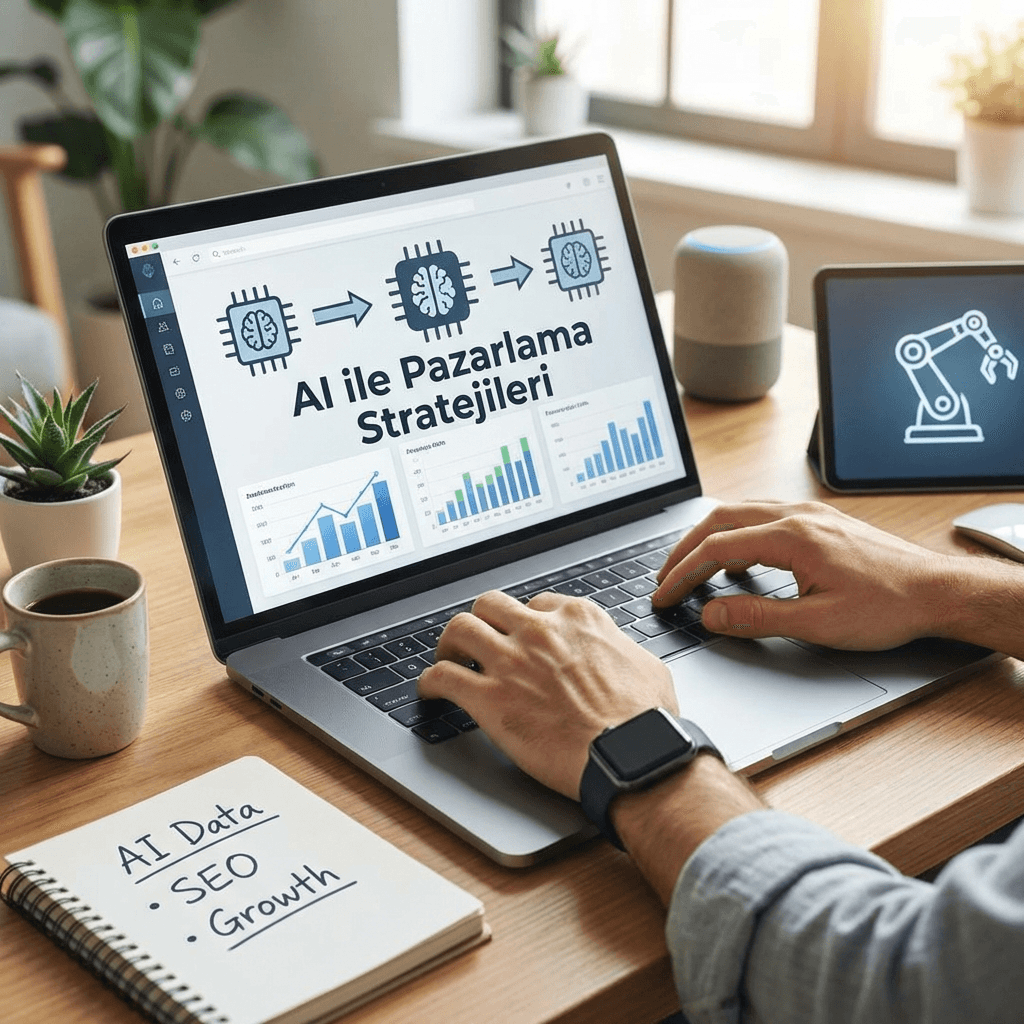
AI Marketing Strategies: The Future of Digital Marketing
Artificial intelligence technologies are revolutionizing the modern marketing landscape. AI marketing strategies offer innovative solutions across various areas, from personalizing customer experiences to sales forecasting. In this comprehensive guide, we'll explore the role of AI in marketing strategies and their practical applications.
Core Components of AI Marketing
Customer Segmentation and Targeting
AI goes beyond traditional demographic data by analyzing customer behaviors. Machine learning algorithms process customer data to create micro-segments and develop customized marketing messages for each segment. This approach ensures more efficient use of marketing budgets and increased conversion rates.
AI-powered segmentation tools instantly detect changes in customer preferences through real-time data analysis, allowing marketing campaigns to be dynamically updated and improving customer satisfaction.
Predictive Analytics for Sales Forecasting
Predictive analytics is at the heart of AI marketing strategies. By analyzing historical sales data, seasonal trends, and market conditions, future sales predictions are made. This information is critical for inventory management, budget planning, and campaign timing.
Machine learning models calculate Customer Lifetime Value (CLV) to determine which customers to focus on, significantly improving marketing ROI.
Personalized Content Creation
AI Content Creation Tools
AI-powered content creation tools reduce the workload of marketing teams while improving content quality. GPT-based systems generate personalized content for blog posts, social media shares, and email campaigns.
These tools create adapted messages for different target audiences while maintaining brand voice. A/B testing determines the most effective content variations, ensuring continuous optimization.
Dynamic Content Optimization
AI algorithms analyze user behaviors in real-time to dynamically optimize website content. The most suitable content is presented considering the visitor's past interactions, geographic location, and device information.
This approach reduces bounce rates while increasing page dwell time and conversion rates. Particularly in e-commerce sites, personalizing product recommendations directly contributes to sales growth.
Chatbot and Customer Service Automation
AI-Powered Customer Support
AI-powered chatbots provide 24/7 customer support, increasing customer satisfaction. Through Natural Language Processing (NLP) technologies, they understand customer questions and provide appropriate responses.
These systems automatically answer frequently asked questions while directing complex situations to human representatives. Proactive support is offered by analyzing customer interaction history.
Social Media and Influencer Marketing
Social Media Analytics
AI tools analyze social media performance to determine the most effective content types, posting times, and hashtag strategies. Brand perception is measured through sentiment analysis, and crisis management is conducted proactively.
Social listening tools enable continuous updating of marketing strategies through competitor analysis and trend tracking. This information plays a critical role in content calendar planning.
Email Marketing Optimization
Personalized Email Campaigns
AI-powered email marketing platforms determine personalized content, send times, and frequency for each recipient. The most effective email strategies are developed through customer behavior analysis.
A/B tests are automatically run, and winning variations are applied to the entire campaign. This process continuously improves open rates and click-through rates.
Performance Measurement and ROI Analysis
Multi-Touch Attribution
AI algorithms analyze all touchpoints in the customer journey to measure each channel's true contribution. This approach ensures marketing budgets are directed to the most effective channels.
Customer behaviors are analyzed holistically through cross-device tracking, optimizing omnichannel marketing strategies.
Conclusion
AI marketing strategies are powerful tools that enable businesses to personalize customer experiences and increase marketing ROI. As AI technologies continue to evolve, marketing professionals' effective use of these tools is critical for gaining competitive advantage.
Successful AI marketing strategies are possible through the right combination of technology and human intelligence. Businesses should focus on data quality and continuously develop their strategies through test-learn-optimize cycles.